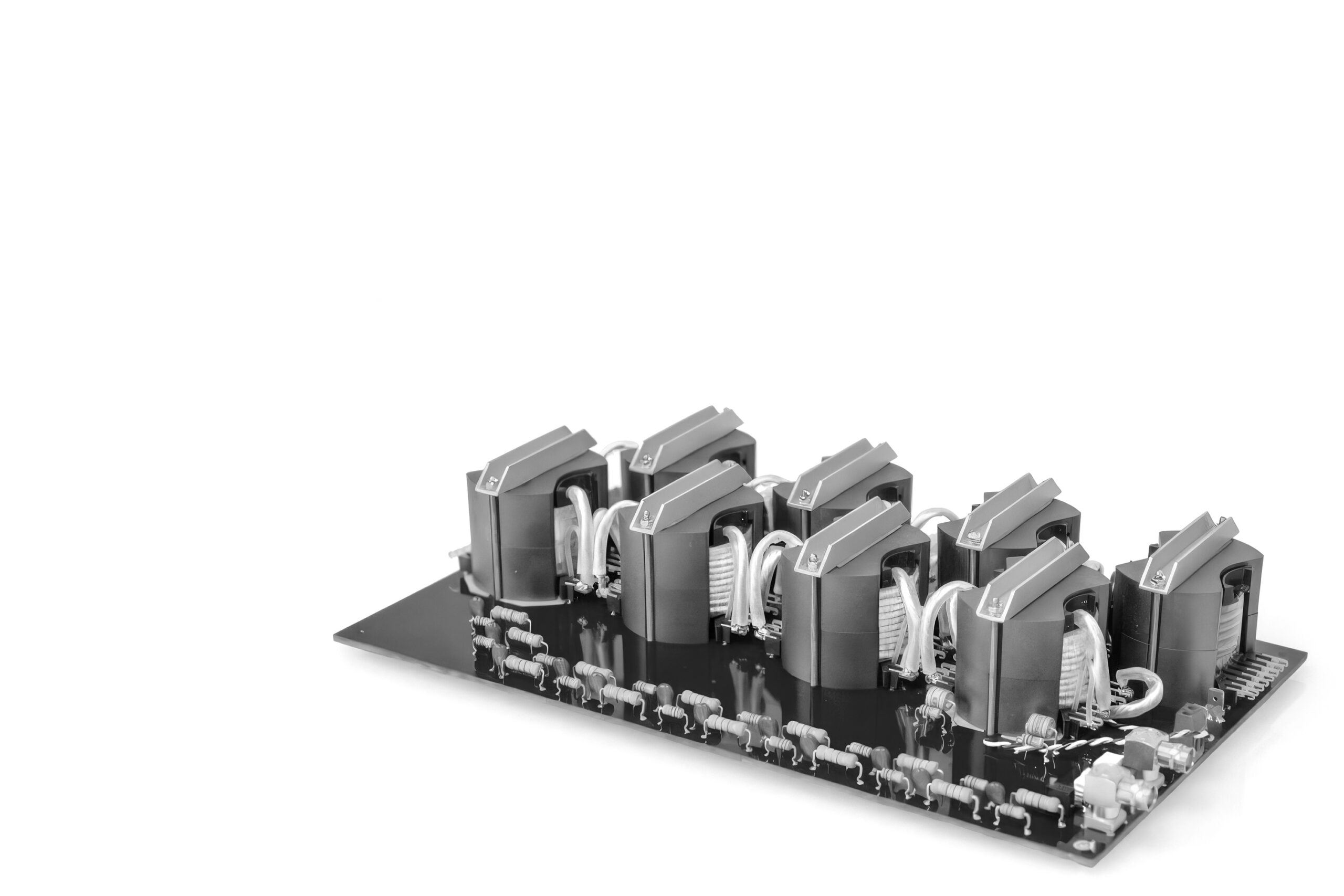
Custom electronic design and manufacture: for applications where standard products don't exist
When the instrument you need isn't in any catalog
3 Core Use Cases
Nuclear measurement and radiation detection
High-voltage pulse applications
Scientific and medical instrumentation
Product areas and capabilities
High-Voltage
Pulse Generators
Multi-Channel Analyzers & Spectrometers
Nuclear Instrumentation & Detectors
Complete Device Engineering & Assembly
How a custom project works
Requirements are defined and validated
Mechatronic system is designed
Prototype is built, assembled, and tested
Series device is built, delivered, and supported
Who delivers this service
Custom Electronics Specialist: 25+ Years
Frequently asked questions
A multi-channel analyzer (MCA) is an electronic instrument used in nuclear spectroscopy to sort and count incoming pulses by amplitude, creating an energy spectrum of detected radiation or particles. MCAs are used in nuclear physics research, radiation protection, environmental measurement, and medical imaging. Because performance requirements vary significantly between applications, MCAs are typically designed to specific measurement requirements rather than selected from a standard catalog.
High-voltage pulse generators produce precisely controlled electrical pulses with defined amplitude, duration, rise time, and repetition rate. In research, they drive particle detectors, stimulate plasma discharge, and test dielectric materials. In industrial applications, they are used in electrostatic processes and high-voltage insulation testing. The specific requirements of each application almost always require a custom design.
Timeline depends on system complexity and specification completeness. Simple custom assemblies can move from specification to prototype in 4–8 weeks. Complex systems involving new HV circuit topologies or multi-channel firmware may take 3–6 months to reach a validated prototype. Assessimus confirms estimated timelines as part of the initial project review.
Custom electronics design sits within the network's Technical Systems pillar, alongside EMC test equipment and battery systems. Products developed through this service often go on to require compliance testing through other parts of the network, such as EMC equipment validation or material qualification. Because these are all available through Assessimus, the path from instrument design to compliant product is managed as a single coordinated engagement.